


News
10
September
Private Label Blush Manufacturer 2026 Custom Powder Blush
-
 author

A blush shade can gain attention quickly, but turning that interest into a commercially workable product is another challenge. A viral color may still become slow-moving inventory if the undertone misses the target customer, several SKUs look too similar on skin, or bulk production no longer matches the approved sample.
That risk matters in 2026, as red blush, cranberry tones, TikTok transition blush, and high-placement cheek color keep the category highly visible. For brands, importers, and distributors sourcing private label blush, trend visibility is only the starting point. Shade direction, pigmentation, single- or duo-pan format, SKU count, and sample-to-bulk consistency have a much greater impact on commercial results.
This guide focuses on those decisions and shows how to turn current blush demand into a workable powder blush sourcing brief.
Why 2026 Blush Trends Affect Private Label Shade Planning
Social trends can reveal demand, but they rarely arrive as a factory-ready brief. “Red,” “cranberry,” or “transition blush” still leaves important choices open: warm or cool, sheer or saturated, one pan or two. A workable powder blush project turns the visual reference into shade and performance targets that can be sampled and compared.
Red and Cranberry Blush Need More Than a Color Name
Red is a color family, not a specification. Tomato red, cherry, brick, berry, and cranberry can shift noticeably after blending. A blue-leaning red may read pinker on skin; an orange-red can move closer to coral or peach. The current red-blush revival and FW26 cranberry looks make those distinctions especially relevant to 2026 product planning.
A private label blush brief works better with a benchmark shade, target undertone, desired buildability, and the skin-tone range the brand plans to serve. “Make it red” leaves too much room for interpretation.
If an approved cranberry turns warmer, cooler, lighter, or deeper in production, retailers may see a different shade even though the name and packaging have not changed.
TikTok Transition Blush Points to Coordinated Color
The commercial value of transition blush is the interest in coordinated, layered color rather than the trend name itself. The current conversation centers on gradients that connect the under-eye and cheek area with several tones.
For some ranges, that makes format part of the shade strategy, not just a packaging decision. A coordinated duo may offer more value than another standalone SKU, provided both colors have a clear role after blending.
Single-Pan or Duo Powder Blush: Which Format Fits the Range?
Once the shade direction is clear, format affects stock planning, packaging, price positioning, and use. A single pan keeps one color story simple. A duo adds layering or shade adjustment without asking the consumer to buy two separate compacts.
Single-Pan Blush for Clear Hero Shades
A single pan works well when one color carries the concept or when the range uses clearly separated shades such as rose, coral, berry, or a trend-led red.
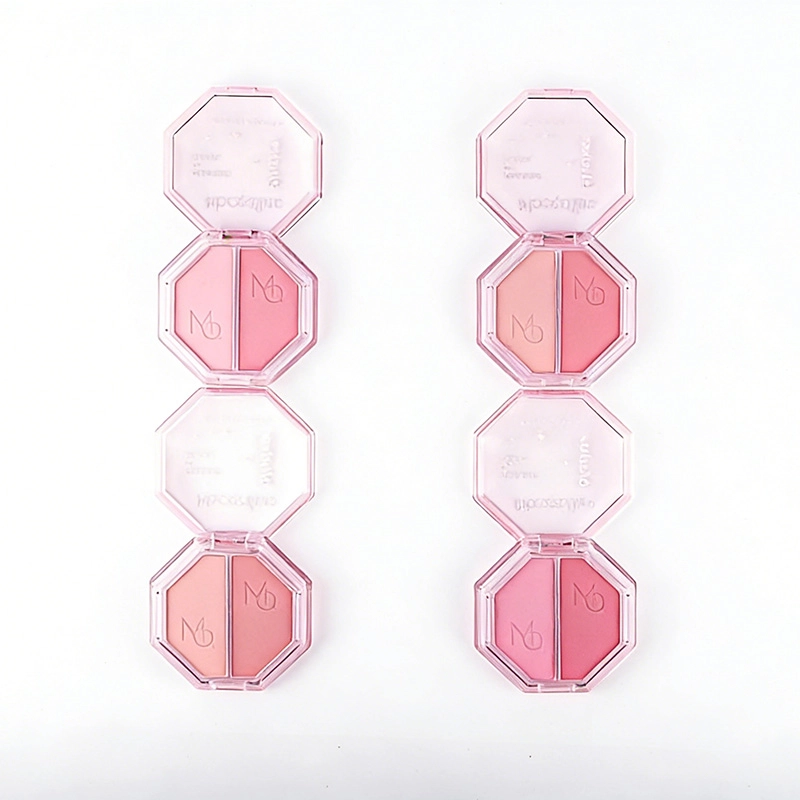
Mocoallure’s Blush-5104 is a compact blusher in an octagonal case for wholesale, distribution, and private label projects.
Several pans that look different in product photography can still blend into nearly the same color on skin. That creates duplicate inventory without giving distributors much more to sell.
Duo Blush for Layering and Shade Adjustment
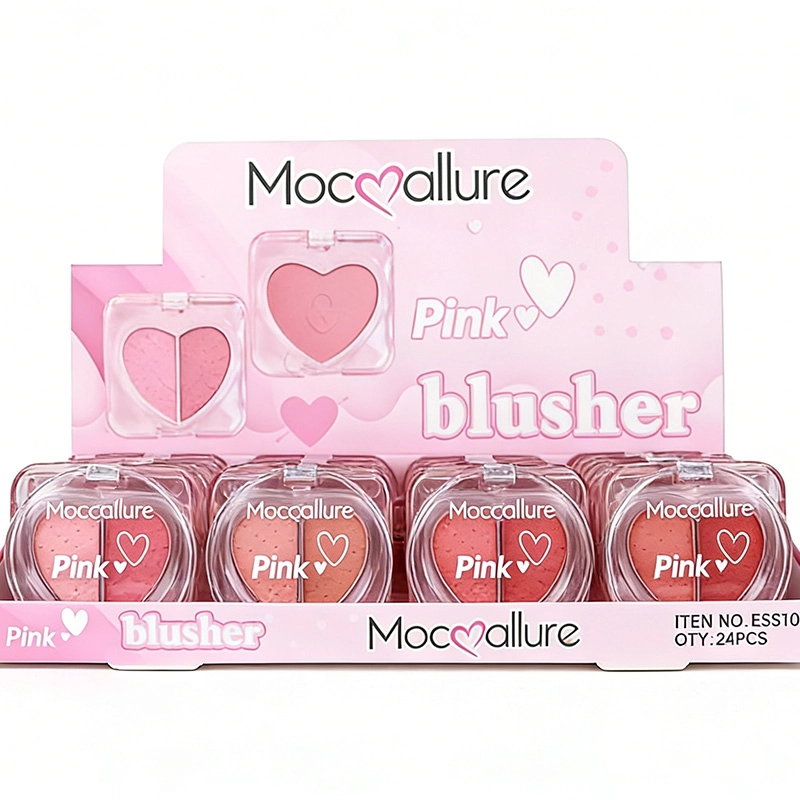
A duo earns its space when both pans have a job to do. Mocoallure’s Blush-5105 is a two-pan compact shown with coordinated pink, coral, and rose tones. The Heart-shaped Duo Blush ES5109 also supports single-tone use and multi-tone layering.
If the deeper shade overwhelms the lighter one after a single brush pickup, one side may end up underused. The compact still looks good; the product value is weaker.
Which Blush Specifications Actually Affect the Finished Product?
Pan color attracts attention first, but applied performance decides whether the product feels easy to use. Undertone, pigmentation, buildability, pickup, blendability, and shade interaction are more useful purchasing criteria than generic claims.
Undertone, Pigmentation, and Buildability
Maximum pigmentation is not automatically the best specification. Strong payoff can suit bold cheek looks, but it may feel hard to control for customers who prefer softer daily makeup. A buildable powder blush gives more room to adjust intensity.
“Medium-buildable cranberry with a cool-leaning undertone” is a more useful development target than “high-pigment viral red.” Applied color also needs review on skin tones relevant to the sales market.
Blendability, Pickup, and Shade Interaction
Duo products add another variable: how the colors behave together. One shade can perform well alone and become muddy when layered with the second. Another may dominate so quickly that the softer pan becomes decorative.
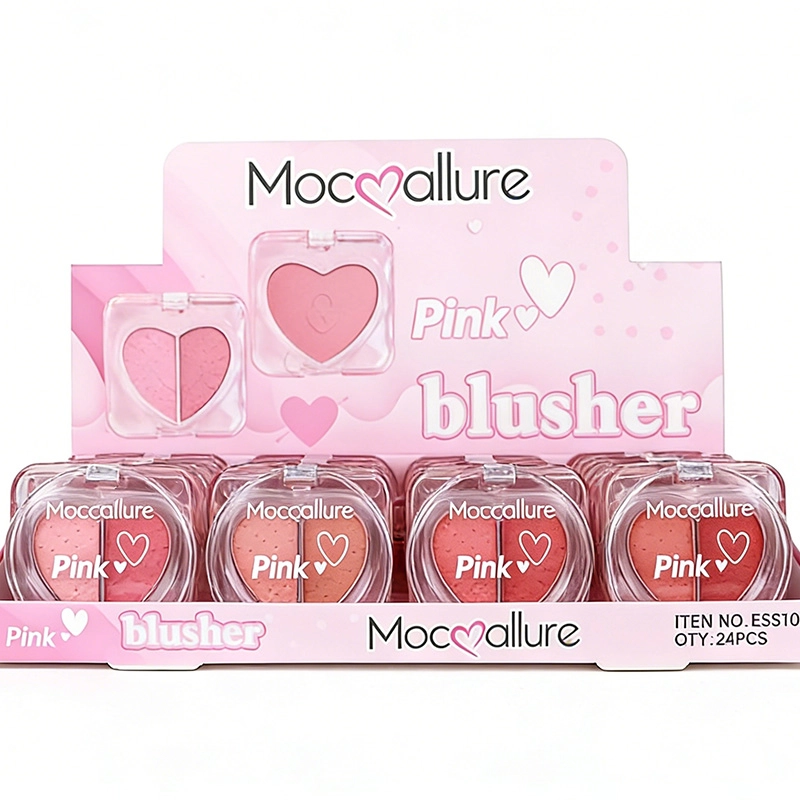
Mocoallure’s Heart-shaped Duo Blush ES5109 is available for OEM/ODM customization and supports single-tone or multi-tone application, making it a useful format reference for coordinated shade pairs.
Too many similar SKUs can still turn a good formula into an inventory problem.
How to Build a Commercial Blush Range Without Overcomplicating the Order
A broad shade range looks impressive, but it also creates more packaging versions, stock positions, forecasts, and reorder decisions. Trend shades can refresh the line without controlling the whole assortment.
Build Core Shades Before Adding Trend SKUs
Core shades can carry repeat business while red or cranberry adds a stronger 2026 story. High-placement blush may change how those colors are marketed, but placement trends can move faster than manufacturing and inventory cycles.
There is no universal right shade count. Sales channel, target skin-tone range, price point, previous sales data, and order volume all matter. Fewer, clearly differentiated shades are often easier for distributors to forecast and reorder.
What Drives MOQ, Cost, and Lead Time?
MOQ and total project cost are related, but they are not the same thing. Shade and SKU structure, packaging, printing requirements, production setup, and how an order is divided across variants can affect MOQ. Total project cost may also include shade development, extra samples, packaging customization, and inventory tied up across several SKUs.
Shade revisions and sample rounds affect development time; packaging availability, printing, approvals, and order volume can move bulk production. Comparing sampling and production timelines separately gives buyers a clearer launch schedule.
How to Evaluate Blush Samples and Suppliers Before Bulk Production
By the sample stage, the trend direction, format, shade plan, and packaging concept already exist on paper. Now the product has to perform in real use and remain repeatable at scale. A low unit price loses its appeal if the color is off, the duo blends poorly, or a repeat order no longer matches the approved reference.
Test Applied Color, Not Just the Pan
A practical review can cover:
- undertone on relevant skin tones
- pigmentation and buildability
- pickup and blendability
- even color payoff
- appearance in daylight and indoor lighting
- shade interaction in a duo
Keep the approved sample as the working benchmark for bulk production and repeat orders. Mocoallure’s OEM/ODM factory guide also covers blush pickup, adhesion, color payoff, sample approval, packaging, and bulk-order controls.
Compare Development Capability, QC, and Reorder Stability
Price matters, but it does not show how a powder blush manufacturer will handle shade adjustments, packaging coordination, sample approval, or later repeat orders.
Mocoallure works with powder makeup and other color cosmetics. Its manufacturing information lists a production facility of about 5,000 square meters, GMPC dual certification, ISO 22716, and OEM/ODM support covering formula development, package design, and mass production.
A buyer does not need a finished technical brief to start. A benchmark shade, product reference, or clear color direction gives the project a useful starting point. For a more specific sampling and quotation discussion, add the target undertone, single- or duo-pan format, packaging requirements, estimated quantity, and destination market.
Conclusion
Red blush, cranberry tones, TikTok transition blush, and high-placement color give cheek makeup strong visibility in 2026. Long-term commercial value still comes from clear undertones, controllable pigmentation, useful shade pairings, manageable SKU counts, and consistent bulk color.
Planning a private label blush project? A benchmark shade, reference product, or clear color family is enough to begin the discussion with Mocoallure. Buyers with a more developed brief can also share the preferred format, packaging concept, estimated quantity, and destination market to discuss samples and request an OEM/ODM quotation.
FAQ
Q1: What information do I need to send to a blush manufacturer for sampling?
A: A benchmark shade or product reference is enough to start. A detailed brief can add undertone, pigmentation target, format, packaging, quantity, and destination market.
Q2: What affects the MOQ and cost of a private label blush project?
A: Shade and SKU structure, packaging, printing, production setup, customization, and order volume can affect MOQ and total cost.
Q3: Is a single-pan or duo powder blush better for a private label project?
A: A single pan simplifies stock planning. A duo makes more sense when coordinated colors add useful layering or shade adjustment.
Q4: How many shades should a private label blush line start with?
A: There is no fixed number. The range needs enough differentiation to serve the target customer without creating unnecessary inventory.
Q5: How do I evaluate a private label blush sample before bulk production?
A: Check applied undertone, pigmentation, buildability, pickup, blendability, and color under realistic lighting. For a duo, test each shade alone and layered together.

our best Product
Product We’re Offering
call emergency
+86 18767932113

get in touch
How May We Help You!

our testimonials
What They Say About Our

We’ve been wholesaling beauty products from this supplier for 2 years, and the quality has never disappointed!