

News
17
September
Private Label Eyeshadow Palette Manufacturer 2026 FallWinter Shade, Formula & Packaging Guide
-
 author

Eyeshadow is moving into a more expressive cycle in 2026. Smoky grey, charcoal, plum, shimmer, metallic finishes, and stronger eye looks are gaining visibility as Fall/Winter approaches. Grey, shimmer, and smoky eyes are already prominent in current 2026 beauty coverage, while recent transitional makeup trends continue to favor charcoal and more defined eye looks.
For beauty brands, importers, and distributors, the commercial question is more practical. A private label eyeshadow palette still needs a clear pan plan, balanced finishes, suitable packaging, and a sample that can be repeated in bulk.
Mocoallure develops powder color cosmetics for OEM/ODM and private label projects, including customizable eyeshadow palettes for international beauty businesses.
Fall/Winter 2026 Eyeshadow Demand Signals for Private Label Development
Trend direction gives a collection a reason to exist now, but it still has to become a sourcing brief. The useful question is which shades create the seasonal hook, which ones support regular wear, and how they fit together in one sellable assortment.
Smoky Grey and Charcoal for Wearable Depth
Grey and charcoal can give a Fall/Winter palette a clear identity without dominating the assortment. Soft grey works well beside taupe and neutral brown, while charcoal can add depth to a smoky-eye story.
The same palette can move from a soft daytime look to a stronger TikTok, Instagram Reels, or GRWM transformation without making every pan trend-led. For a B2B buyer, that gives one product more room across retail creative, creator campaigns, and seasonal content.
Plum and Berry Tones for Seasonal Color Stories
Plum introduces richer color while still sitting comfortably beside espresso, taupe, muted rose, or champagne.
A shade called “plum” may lean brown, red, purple, or cool berry once applied. Buyers should approve it on skin and define its role rather than relying only on pan appearance. The point is not to add a fashionable color for its own sake, but to make sure the seasonal shade fits the wider assortment.
Shimmer and Metallic Finishes for Creator-Led and Social-Commerce Launches
Reflective shades read quickly in close-up photography and short-form video. Shimmer is also enjoying a broader 2026 comeback, with more refined reflective finishes appearing across eye makeup.
For brands selling through TikTok Shop, marketplaces, creator campaigns, or other social-commerce channels, one distinctive shimmer or metallic pan can give the palette a stronger visual lead.
Once the color direction is narrowed down, the brief has to move from “which colors are popular?” to “how many shades should we actually produce?” That is where palette architecture starts to affect sampling, cost, and retail positioning.
Palette Architecture: Pan Count, Shade Roles and Assortment Planning
Pan count affects shade development, formula approval, packaging, and inventory. A clear assortment makes the project easier to quote, test, and reorder.
Choosing a 4-, 6-, 9- or 12-Pan Palette Format
| Palette format | Practical direction | Key planning point |
| 4-pan | Focused capsule concept | Every shade needs a clear function |
| 6-pan | Compact day-to-night story | Enough variation without a large assortment |
| 9-pan | Broader color and finish mix | More room for depth and accent shades |
| 12-pan | Expanded collection | More shade and formula approvals to manage |
The right format depends on the sales channel, target customer, retail positioning, and color story. A larger palette is not automatically more competitive.
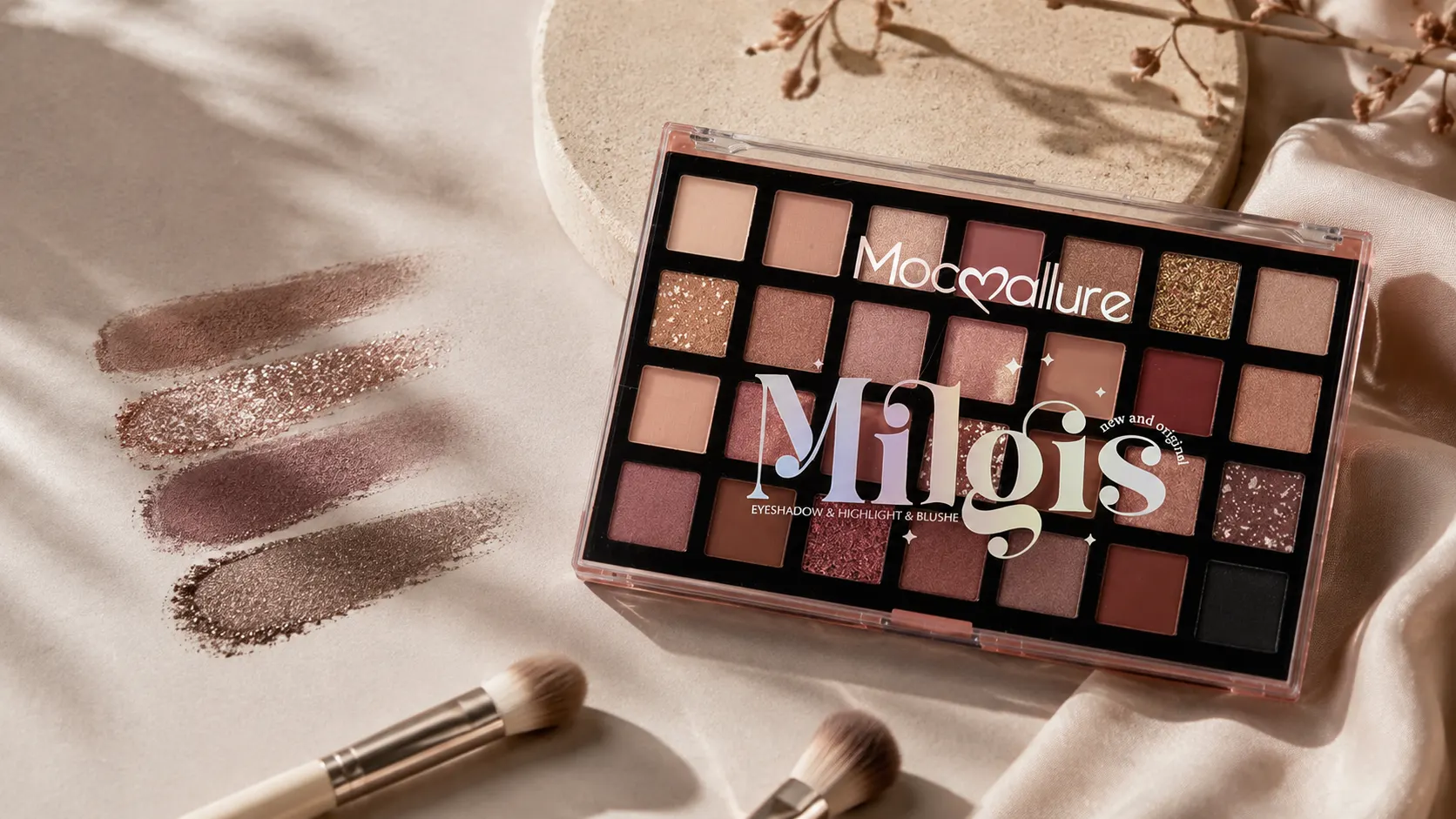
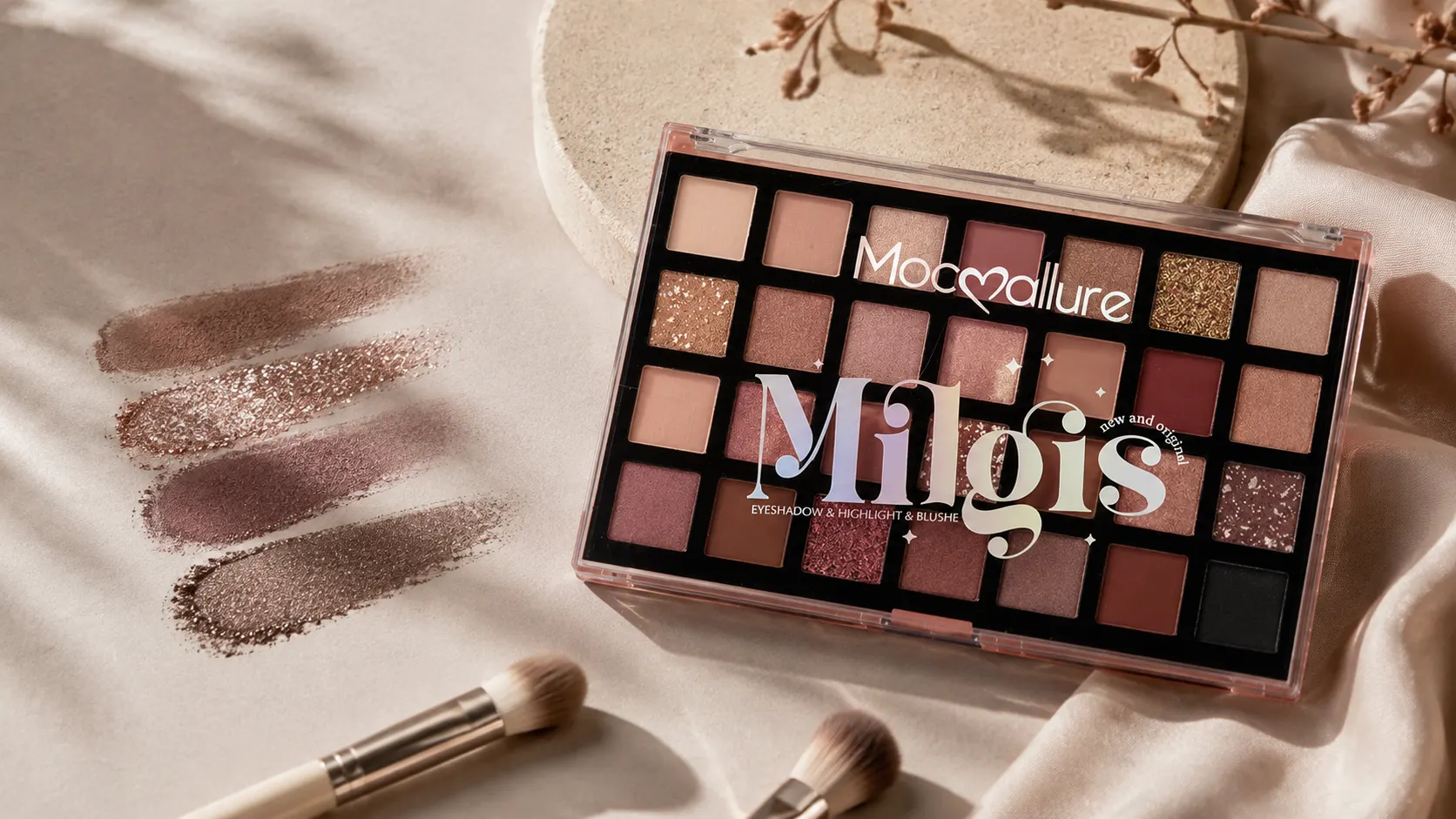
Mocoallure’s ES5107 Custom Eyeshadow Palette is one OEM/ODM format reference for brands looking at customizable branding, packaging, and product development.
Assigning a Commercial Role to Each Shade
A palette is easier to build when every pan has a job:
- base or soft neutral
- transition shade
- deeper defining shade
- seasonal accent
- campaign-focused color
- shimmer or metallic highlight
It also makes duplicate shades easier to catch before sampling; two pans may look different yet blend to almost the same result.
A nine-pan Fall/Winter concept might use neutral browns for everyday wear, grey for depth, plum for seasonal color, and one or two reflective finishes for contrast. The exact mix should follow the target customer.
Formula and Finish Planning for Multi-Shade Eyeshadow Palettes
Once the assortment is set, formula performance becomes the next buying decision. Matte, satin, shimmer, and metallic shades can behave differently during pickup, blending, pressing, and wear. They do not need identical texture, but they should feel like they belong in the same product.
Balancing High Pigment, Blendability and Controlled Fallout
A high pigment eyeshadow palette still needs control. A deep defining shade may call for stronger payoff, while a transition color may work better with gradual buildability.
The final sample should show consistent payoff, controlled fallout, and workable blendability across the palette. These are also among the eyeshadow-specific QC points Mocoallure uses in its OEM/ODM content.
Pressing Strength, Pickup and Pan Integrity
Pressed eyeshadow needs enough stability for handling, packing, and international transport while still releasing product comfortably during use.
Sample review should cover pickup, pressing consistency, pan condition, and how finishes behave side by side. Once the formula set and pan layout are stable, packaging can be developed around the actual product rather than an early visual concept.
Private Label, OEM/ODM and Packaging Development Options
Packaging affects layout, branding space, presentation, and the information needed for the destination market. Buyers also need to define how far customization should go. Some projects mainly need branding and packaging changes; others involve deeper shade, finish, or product development.
Packaging Configuration and Brand Customization
A useful packaging brief should cover pan arrangement, logo placement, artwork, outer packaging, and retail presentation.
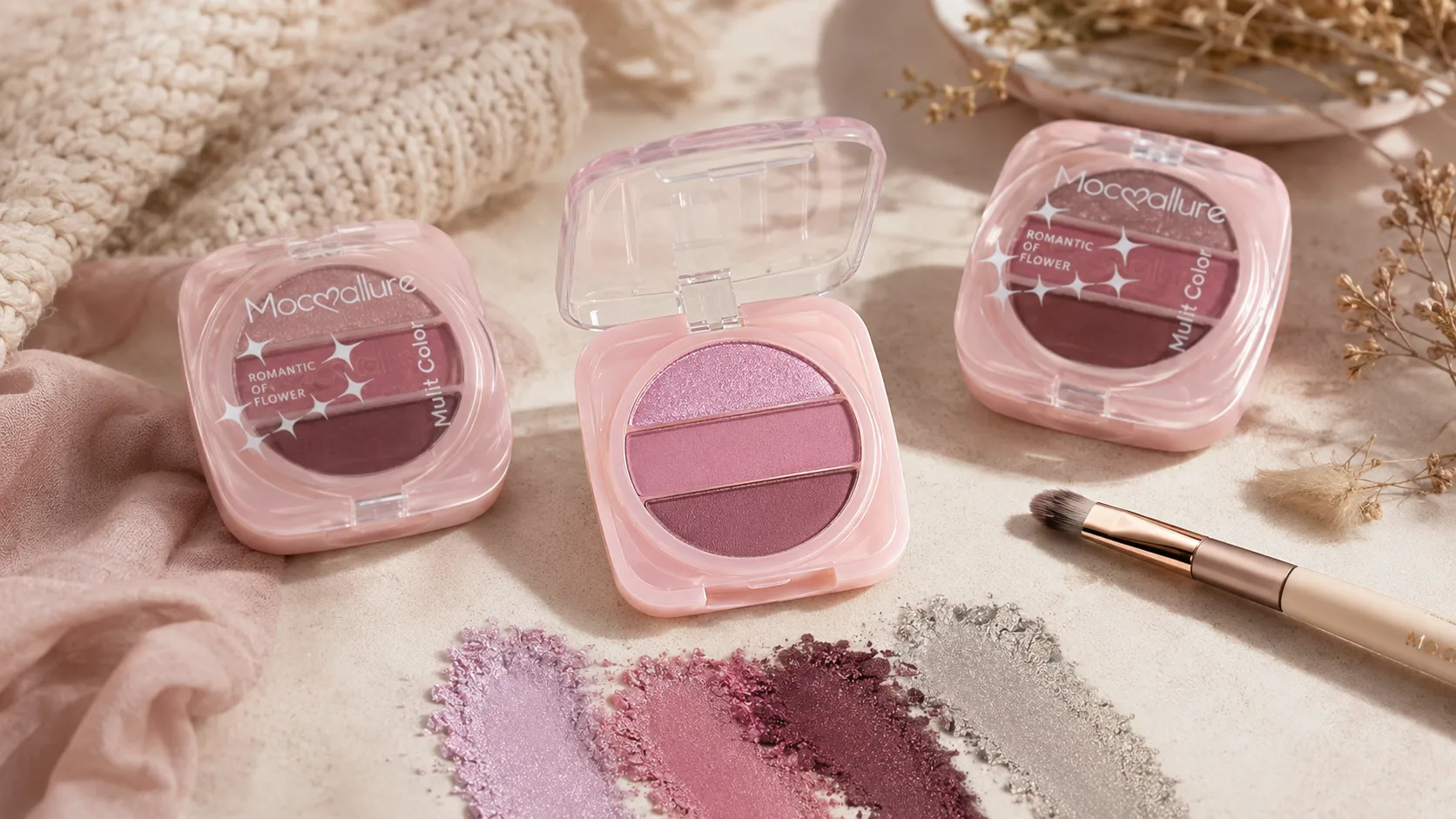
Mocoallure’s ES5102 Custom Eyeshadow Palette is a multi-shade format for private label brands, retailers, and distributors, with support for private label development, customized packaging, and product customization.
Choosing Between Private Label and OEM/ODM Development
Private label can suit a more straightforward branded project. OEM/ODM becomes more relevant when the buyer needs further work on specifications, shades, finishes, packaging, or other project requirements.
In quotation discussions, “custom eyeshadow palette” can mean very different things. One buyer may only need customized artwork; another may be developing several shades and finish types with new packaging. Defining that scope early helps the supplier quote the right development route and reduces unnecessary sample revisions.
Sampling, MOQ and Bulk Production Planning
With the palette structure, formula direction, and packaging concept in place, the project moves into sourcing decisions. A useful RFQ needs more detail than a request for a unit price.
Eyeshadow Palette-Specific MOQ and Cost Drivers
There is no single MOQ for every private label eyeshadow palette project. Palette format, shade count, formula development, packaging, printing, artwork, and order structure can all affect the quotation.
A buyer does not need a finished technical brief. “Nine-pan smoky palette with neutral mattes, plum accents, two reflective shades, and branded packaging” already gives the development team something specific to evaluate.
Eyeshadow Palette Sample Approval Before Bulk Production
Each shade should be checked separately and then as part of the complete palette. Review color payoff, blendability, fallout, pressing, surface condition, pan placement, packaging, and artwork.
Shade positions and product references should stay aligned with the approved version for bulk production and repeat orders.
Mocoallure’s OEM/ODM Factory Guide covers eyeshadow-specific QC points including pigment strength, blendability, low fallout, pressing, and balance between matte and shimmer shades.
Preparing an Eyeshadow Palette RFQ for Accurate Quotation
A good RFQ should include the destination market, expected quantity, pan count, shade references, finish direction, packaging idea, branding requirements, and target launch date.
If a benchmark palette is available, identify what should stay similar and what should change. That gives the manufacturer a clearer basis for quotation and sampling.
Mocoallure Eyeshadow Manufacturing and OEM/ODM Capabilities
Mocoallure manufactures powder color cosmetics including eyeshadow and operates a production facility of about 5,000 square meters. Its OEM/ODM operation covers formula development, package design, and mass production, supported by GMPC and ISO 22716 systems.
This keeps the sourcing path focused on what matters to the buyer: product concept, shade planning, sampling, packaging approval, and bulk production.
Conclusion
Fall/Winter 2026 creates useful product-development opportunities around smoky grey, charcoal, plum, shimmer, metallic finishes, and more expressive eye makeup. Creator-led beauty and social commerce add another reason to think carefully about which shades will carry the visual story.
A commercially viable private label eyeshadow palette should combine current demand with clear pan roles, balanced formulas, suitable packaging, and repeatable bulk specifications.
Brands, importers, retailers, and distributors preparing a custom eyeshadow project can contact Mocoallure for a project-specific quotation. A pan count, shade reference, finish direction, expected quantity, packaging idea, destination market, and launch timing are enough to start a focused discussion.
FAQ
Q1: What is the MOQ for a private label eyeshadow palette?
A: MOQ depends on the palette format, number of shades, formula requirements, packaging, printing, and order structure. Buyers should provide their expected quantity and customization requirements for a project-specific quotation.
Q2: Can I customize eyeshadow shades, finishes and packaging for a private label palette?
A: Yes. Mocoallure supports private label and OEM/ODM eyeshadow projects with product development, customized packaging, and branding options. The available customization route depends on the specific project requirements.
Q3: How long does eyeshadow palette sampling and bulk production take?
A: Timing depends on shade development, sample revisions, packaging, artwork approval, production scheduling, and order requirements. Sampling and bulk production should be confirmed as separate timelines.
Q4: What should I send a private label eyeshadow palette manufacturer for a quotation?
A: Share the destination market, estimated quantity, pan count, shade or benchmark references, finish mix, packaging direction, branding requirements, and target launch date.
Q5: How should I approve an eyeshadow palette sample before bulk production?
A: Review each pan for color payoff, blendability, fallout, pressing, and surface condition, then test several shades together. Confirm shade positions, packaging, artwork, and the finished appearance, and keep the approved sample as a reference for bulk production and repeat orders.

our best Product
Product We’re Offering
call emergency
+86 18767932113

get in touch
How May We Help You!

our testimonials
What They Say About Our

We’ve been wholesaling beauty products from this supplier for 2 years, and the quality has never disappointed!