

News
How to Plan a Private Label Makeup Product Assortment for Retailers and Distributors
-
 author
Plan the Product Line Around a Buyer and a Channel
A private label makeup assortment is a commercial system, not a list of attractive products. The first decision is who will buy the collection and where it will be sold. A drugstore retailer, a beauty distributor, a marketplace seller, and a professional makeup channel may need different category depth, price architecture, packaging, and replenishment logic.
Start with a one-page launch map: target customer, sales channel, destination markets, hero category, supporting categories, expected price position, estimated quantities, and launch timing. This keeps the product line narrow enough to develop and broad enough to give the buyer a reason to choose more than one item.
Use roles instead of equal SKU weight
- Hero product: the clearest reason for the collection to exist and the strongest visual lead.
- Routine product: an easy-to-understand item that supports repeat purchase.
- Basket builder: a complementary category that raises the usefulness of the range.
- Discovery product: a distinctive format or finish that gives campaigns a fresh angle.
- Expansion candidate: a product to evaluate after the initial range has feedback.
Build a Balanced Category Mix
Mocoallure’s official product structure gives buyers a practical starting map: Blush, Eyebrow, Eyeshadow, Highlight, Make up set, and Powder.
The categories are broad enough to support different launch concepts, but they should not all be treated as mandatory. The right mix depends on the customer problem, shelf or catalogue space, and the level of packaging and formula development the team can approve.
Blush as a visible complexion anchor
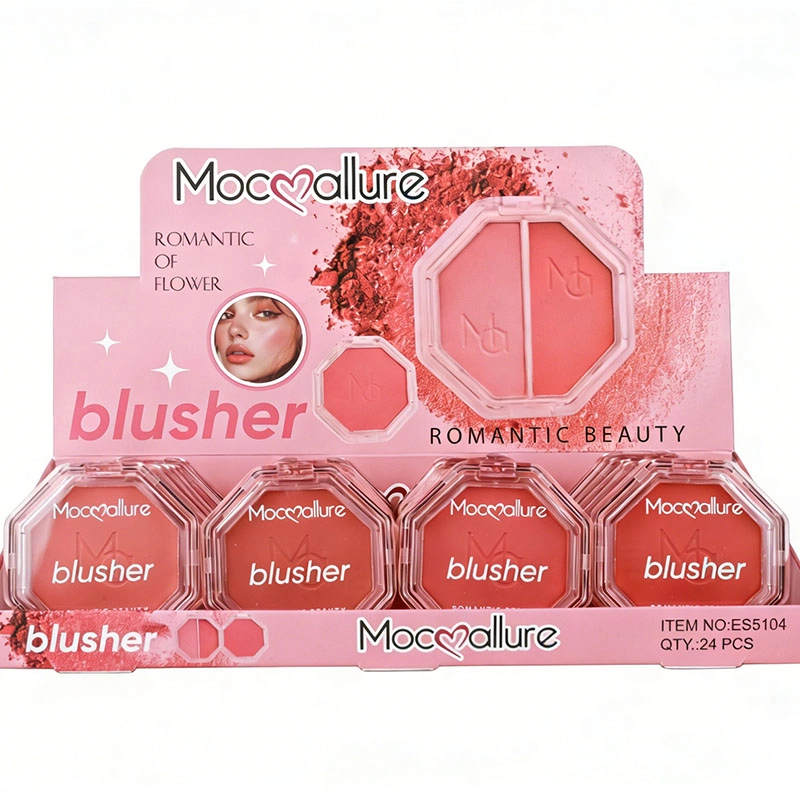
Blush can give a collection an immediate color story and a clear face-placement benefit. Mocoallure lists compact blush formats including Blush-5104, Blush-5105, and heart-shaped powder blush options.
For an assortment plan, use one format as the visual anchor and decide whether a second option adds a meaningful difference in finish, shade story, or channel presentation rather than simply increasing the model count.
Eyebrow powder as a functional companion
Eyebrow powder can make a color-led range feel more complete because it serves a defined daily-use task. The Tri-Color Eyebrow Powder ES5106 gives a buyer a concrete reference for evaluating a multi-tone brow format.
The decision is whether the brow product supports the same customer and channel as the hero category, with packaging and shade communication that are easy to understand.
Highlight for visual differentiation
Highlighter can create a strong image and short-form video asset, but it should have a clear role in the line. Mocoallure’s Highlight-3855 is a reference point for a private label highlighter project.
A buyer can assess whether the category adds a distinct finish or occasion to the range, then keep the packaging language consistent with the blush and powder products.
Powder for a routine or complexion story
Powder products can support a routine-led collection, but the category needs a specific customer job. Decide whether the item is meant to set makeup, refine appearance, support a travel format, or serve another defined use.
Keep the assortment claim narrow until the exact product format, formula, packaging, and market copy are confirmed.
Eyeshadow as a color or campaign category
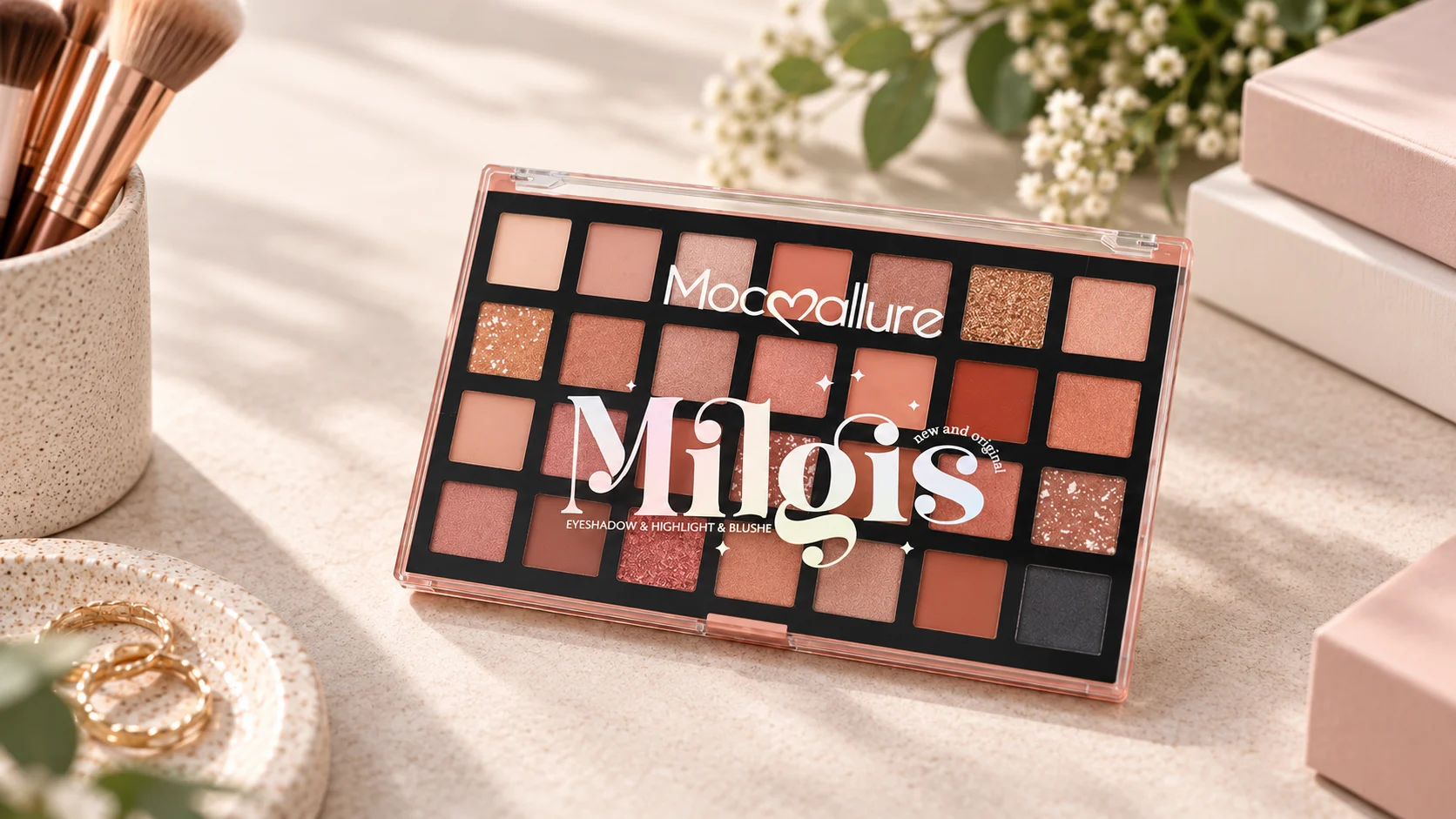
Eyeshadow can carry a seasonal or expressive story, yet it often expands the approval workload because each shade and finish must be reviewed. Mocoallure lists customizable multi-shade eyeshadow formats such as ES5102 and ES5107.
In a first range, treat eyeshadow as a deliberate hero or campaign category rather than adding a large palette without a clear retail role.
Choose the Smallest Range That Tells a Complete Story
A compact launch can be easier to sample, photograph, explain, and reorder. A broader collection can create more cross-selling opportunities, but it also increases artwork versions, product approvals, inventory exposure, and the number of decisions that must stay aligned.
There is no universal best launch size; the useful test is whether every item has a distinct role and a plausible buyer next step.
Use a simple assortment matrix before contacting a manufacturer. List each candidate product, the customer task it solves, the channel where it will appear, the packaging format, the evidence still needed, and the consequence if it is delayed.
Remove products that only repeat an existing role. Keep a separate list of expansion candidates so the first order remains coherent.
A decision matrix for early planning
- Name the collection promise in one sentence.
- Select one hero category and no more than the number of supporting roles your team can approve properly.
- Assign each candidate product a customer task, channel, package type, and visual role.
- Mark which facts are confirmed and which require a sample, artwork review, or market check.
- Prepare a first-round RFQ with the selected range and keep expansion items outside the initial quote.
Connect Assortment Choices to Packaging and Development
A product line is easier to manage when the packaging system is planned at the same time as the categories. Decide which components can share a visual language, which products need different closures or formats, and where labels, shade names, barcodes, and market information must appear. A shared system can reduce visual fragmentation without forcing every product into the same container.
Mocoallure describes OEM/ODM support from formula development through package design and mass production. That capability is relevant when a buyer wants a coordinated range, but the buyer still needs to define the product roles, approval order, artwork scope, and market requirements.
A single supplier conversation is more useful when the assortment is already expressed as decisions rather than a long wish list.
Keep formula and finish decisions category-specific
A coherent collection does not require every product to behave the same way. Blush, highlight, eyebrow powder, eyeshadow, and loose powder can have different texture and finish priorities.
What should be consistent is the buyer-facing promise: shade naming, packaging hierarchy, usage language, and the standard used to approve the final sample.
Adapt the Range to the Route to Market
Retailers usually need a line that is easy to shelf, compare, replenish, and explain to store teams. Distributors need product information that can travel through a catalogue and multiple markets. Ecommerce sellers need clear images, searchable names, parcel-friendly packaging, and a collection that can be merchandised in bundles or routines. These needs can change which category deserves the hero position.
For international sales, keep a market matrix for language, claims, ingredient presentation, responsible parties, and packaging obligations. The EU cosmetics framework includes requirements around safety reports, an EU responsible person, CPNP notification, ingredient naming, and claims.
Those requirements should inform the planning conversation, but they do not make one assortment or artwork file automatically ready for every market.
Prepare an RFQ That Lets the Range Be Quoted
A useful request includes the target market, channel, category list, product roles, expected quantities, product references, formula direction, packaging direction, branding requirements, and launch window.
State which items are essential for the first release and which are optional. This gives the manufacturer a way to separate the core project from later expansion and identify what needs sampling.
Use Mocoallure’s product categories to build the shortlist, then send a focused project request through the quotation contact. Include the exact category, reference product, target customer, packaging idea, destination market, expected quantity, and the decisions that still need confirmation.
Measure the First Range Before Expanding
After launch, review the signals that match your channel: which products attract qualified inquiries, which items are reordered, which bundles make sense, and where customers need more explanation.
Keep the evidence tied to the role assigned during planning. A product that creates attention but does not convert may need a clearer use case, packaging message, or channel placement before it is replaced.
Expansion should answer a specific gap. Add a shade or finish when the existing category has demand that the current range cannot serve. Add a new category when it solves a different customer task and can share enough commercial infrastructure with the existing line. This discipline protects working capital and keeps the brand easier to understand.
Conclusion
Planning a private label makeup product line starts with a customer, a channel, and a clear collection promise. Use verified categories as a map, assign each product a role, keep the first range coherent, connect packaging and formula decisions, and turn the result into a focused RFQ.
That approach gives importers, distributors, retailers, and brand owners a practical way to compare options and build a line that can expand with evidence.
FAQ
What products should a new private label makeup line include?
There is no universal list. Start with one hero category and supporting products that solve related customer tasks. Mocoallure’s categories include blush, eyebrow, eyeshadow, highlight, make up set, and powder; select from them according to the channel, customer, packaging plan, and approval capacity.
How many products should be in a first makeup assortment?
Choose the smallest range that tells a complete story and that your team can sample, approve, explain, and reorder properly. A fixed number would be an unsupported rule; product roles and channel requirements are more useful planning criteria.
Can one manufacturer develop several makeup categories?
Mocoallure presents a multi-category cosmetics range and describes OEM/ODM support covering formula development, package design, and mass production. Confirm the exact products, customization depth, sampling route, and market documentation for the proposed project.
Should a retailer launch eyeshadow, blush, and highlighter together?
Only when the three categories share a clear customer and merchandising story. Compare the approval workload, packaging system, shade communication, and channel role for each category. A smaller launch with a strong hero product may be easier to execute than a broad but unclear range.
What information should be included in an assortment RFQ?
Send the target market, sales channel, customer profile, category list, product roles, references, estimated quantities, formula and finish direction, packaging idea, branding needs, and launch window. Separate first-release items from later expansion candidates.

our best Product
Product We’re Offering
call emergency
+86 18767932113

get in touch
How May We Help You!

our testimonials
What They Say About Our

We’ve been wholesaling beauty products from this supplier for 2 years, and the quality has never disappointed!