

News
24
September
Private Label Makeup Packaging A Global B2B Checklist for Retail and E-commerce
-
 author
Start With a Packaging Brief, Not a Logo File
Private label makeup packaging is a product decision, a channel decision, and a market decision at the same time. A logo placed on a stock compact may be enough for a simple launch, while a retailer-ready collection may need coordinated components, outer cartons, artwork files, and market-specific information. The fastest route to a useful quote is a short brief that makes those choices visible before design work begins.
Write down the product category, target customer, selling channel, destination markets, estimated quantity, launch window, and expected customization. This prevents asking for a packaging price while product, artwork, or regulatory questions remain unresolved.
The six fields a supplier needs first
- Product format: pressed powder, loose powder, compact, palette, pencil, or another confirmed format.
- Brand position: entry, masstige, professional, trend-led, or another defined retail role.
- Channel: store shelf, distributor catalogue, marketplace, social commerce, or a mixed route.
- Market: countries or regions where the finished product will be placed on sale.
- Packaging scope: artwork and logo only, an existing structure, or a new structure to develop.
- Commercial timing: target sample approval and launch window, without assuming a production lead time.
Match the Package to the Product Format
Packaging should protect the formula and make the product easy to identify, use, display, and reorder. A pressed powder compact has different interfaces from a loose powder container or multi-pan palette. The format also changes space for shade names, ingredients, warnings, batch information, and brand storytelling.
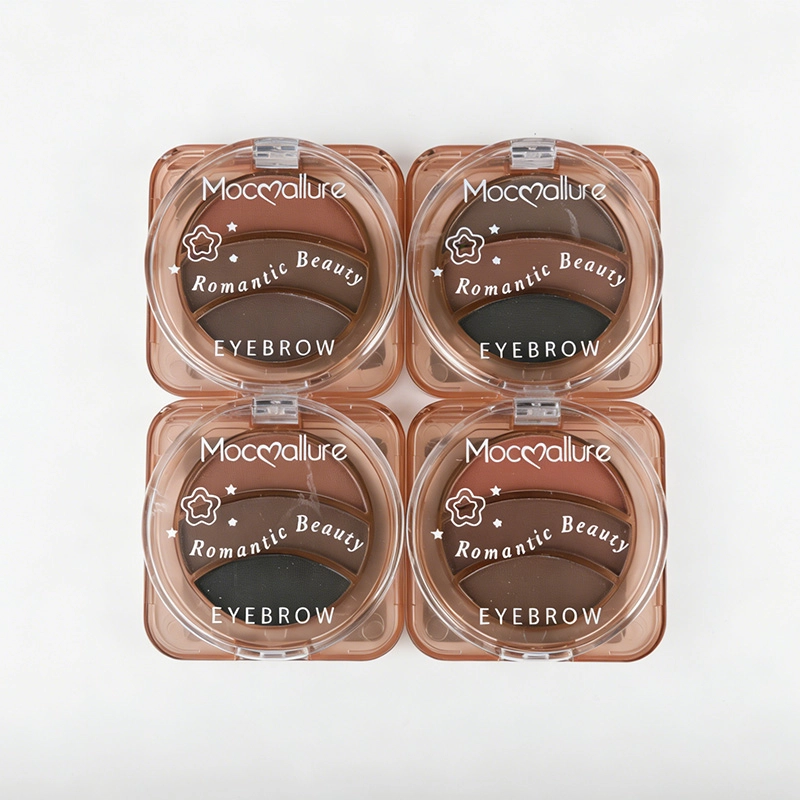
For example, Mocoallure’s powder color cosmetics range includes blush, eyebrow powder, eyeshadow, highlight, and powder products.
A buyer can use that range to compare packaging questions by category: a compact blush may prioritize pan visibility and shelf presentation; a tri-color eyebrow powder may need clear shade orientation; a loose powder project may need a closure and dispensing concept that suits repeated use.
The final structure must be confirmed for the selected product rather than assumed from a picture.
Decide what the customer must see first
Retail packaging has limited attention space. Decide whether the front panel should lead with the product name, shade story, finish, hero ingredient, or a visual brand cue. Keep the hierarchy consistent across a collection so a buyer can compare products quickly. For ecommerce, make the same hierarchy readable in a thumbnail and in product photography; small type and reflective finishes can disappear on a mobile screen.
Choose a Customization Route
The phrase custom makeup packaging can describe several different projects. A brand may need only logo placement and artwork adaptation. Another buyer may need a coordinated compact, carton, insert, and shipping presentation. A third may need packaging developed around a new formula or a collection with several product formats. These routes have different approval work, so state the scope early.
Branding and artwork adaptation
This route works when the structure, closure, and component format are already suitable. Confirm the logo file, color references, print method, finish, copy hierarchy, barcode space, and language versions. Ask for a digital proof and a physical sample when the surface, color, or metallic effect matters to the shelf result.
Existing packaging structure with a new visual system
An existing component can shorten design work, but it still needs a fit check. Review the product dimensions, pan or sifter interface, closure, label area, carton fit, and shipping protection. The right question is not whether a component looks attractive in isolation; it is whether the finished product can be filled, closed, labelled, packed, displayed, and reordered consistently.
New packaging development
A new structure is appropriate when the package itself is part of the product concept. Define the user action, opening method, display position, component materials, decoration, and target cost position before requesting drawings. Keep a change log for dimensions, artwork, and component revisions so the approved version is unambiguous.
Design for Retail, Ecommerce, and Distribution
A package that works on a store shelf may not work equally well in ecommerce fulfilment. Retail buyers care about blocking, facing, shelf readability, and coordinated presentation. Ecommerce teams care about image clarity, parcel durability, dimensional weight, returns, and whether the product arrives with the surface and decoration intact. Distributors also need outer-case identification and a product story that can be explained to downstream retailers.
Build a channel check into the brief. Specify whether the product will be shipped as individual units, mixed cartons, display-ready cases, or a combination. Confirm which surfaces must remain free for labels, barcodes, lot information, and market text. Packaging decisions should be reviewed with the selling channel before artwork is locked.
Use a collection system instead of isolated pieces
A collection feels easier to buy when components share a visual system. Use repeatable rules for logo scale, typography, color coding, finish, and product naming. The system can still allow a blush, highlighter, eyebrow powder, or powder product to have a distinct visual cue. The goal is recognition across the shelf and the distributor catalogue, not identical packaging for every category.
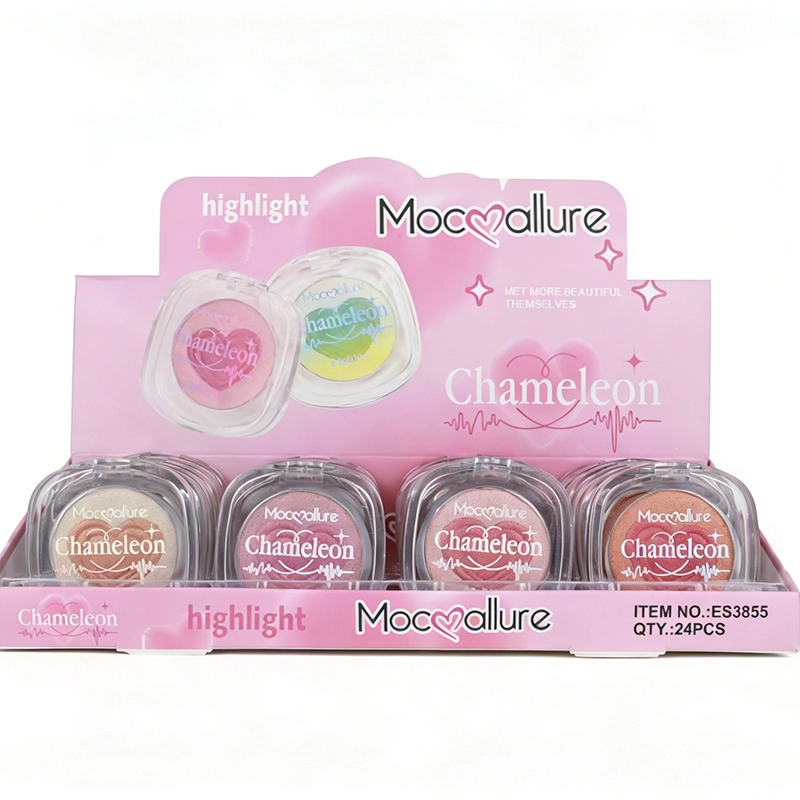
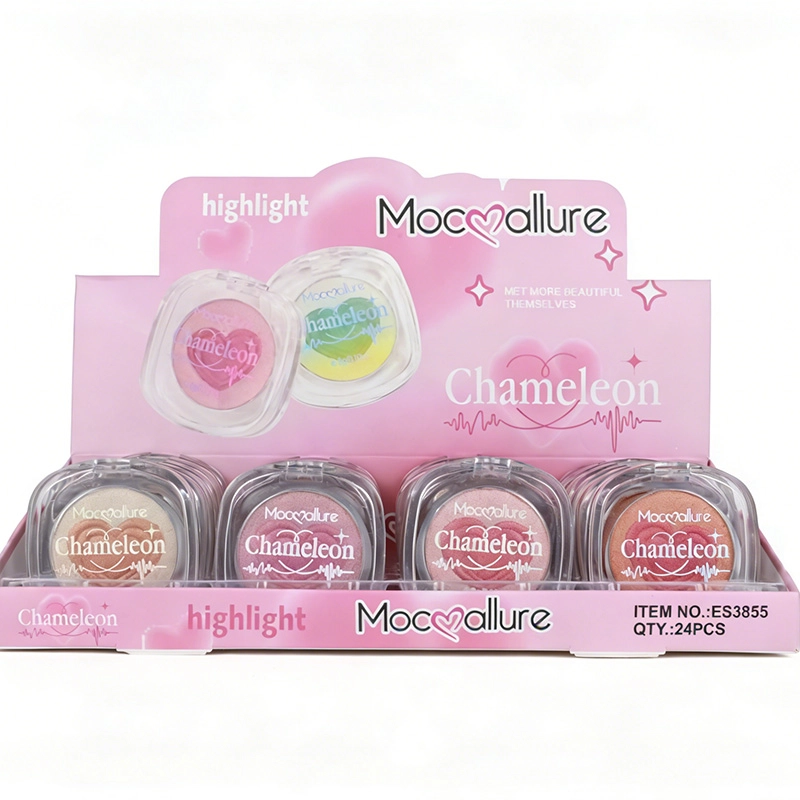
Mocoallure’s product catalogue spans multiple powder categories and includes specific products such as Blush-5104, Blush-5105, ES5106, and Highlight-3855. Those products can serve as separate packaging references when a buyer is building a collection, but the selected component, artwork, and scope must be confirmed for each project.
Build the Information and Compliance Check Before Printing
Packaging copy is part of the finished product, not a final decoration step. The information needed depends on the destination market, product type, claims, ingredients, responsible parties, and local language rules.
A supplier can help prepare artwork, but the brand, importer, or local responsible party may still need to confirm the legal requirements for the market where the product is sold.
For the European Union, Regulation (EC) No 1223/2009 is the main framework for finished cosmetic products. The European Commission describes requirements connected with a product safety report, an EU responsible person, CPNP notification, ingredient naming, and other safety and claims obligations.
These are regulatory reference points, not a guarantee that one packaging file is ready for every country.
Packaging rules can also change independently of cosmetics rules. The European Commission’s Packaging and Packaging Waste Regulation (EU) 2025/40 covers packaging placed on the EU market and sets requirements related to design, composition, reuse, recovery, and waste management.
Its application date is listed as 12 August 2026. A global brand should therefore keep a market matrix and recheck current obligations instead of copying one regional pack across all markets.
Separate confirmed copy from marketing claims
Create two review columns in the artwork file: required product information and optional marketing language. Ingredient lists, product identity, net contents, responsible-party details, warnings, batch or traceability information, and durability information require a compliance review.
Claims such as long-lasting, clean, natural, hypoallergenic, or suitable for all skin types need evidence and market-specific assessment before they are printed.
Sample Approval That Protects the Final Order
Approve packaging as a finished interface with the product inside. Check the component, closure, pan or sifter fit, artwork position, color, surface finish, label adhesion, carton fit, and visible text.
Photograph the approved sample and record the version number, artwork date, product reference, and any agreed changes. Keep the approved sample available for later comparison during production and repeat orders.
Mocoallure describes a one-stop OEM/ODM route that covers formula development, package design, and mass production. That combination can reduce handoffs when the packaging must be developed around a product, but it does not remove the buyer’s responsibility to approve the formula, artwork, market information, and final sample. Use the project brief to make each approval decision explicit.
A practical pre-approval checklist
- Product reference and selected format match the approved brief.
- Component dimensions and closure work with the formula and fill process.
- Logo, artwork, color, finish, shade name, and barcode areas are correct.
- Required market information has been reviewed by the responsible party.
- Carton, insert, shipping case, and display needs are understood.
- The approved sample and artwork version are recorded for bulk comparison.
What to Send With a Packaging Quote Request
A useful request does not need to be a finished engineering specification. Send the product list, target markets, channels, quantities, packaging direction, logo files, copy status, and launch window.
Explain what must stay similar to a reference and what can change. This gives the team a basis for discussing the route and open decisions.
When you are ready to review a private label makeup packaging project with Mocoallure, use the contact route in the same way you would prepare an internal brief: include the product category, packaging scope, target market, channel, estimated quantity, artwork status, and launch timing.
A clear starting package helps both sides focus on fit, revisions, and the next approval.
Conclusion
Private label makeup packaging works best when it is planned around the product, channel, market, and approval path together.
Start with a concise brief, select a customization route, test the package with the formula, separate required copy from claims, and keep a controlled record of the approved version.
That process gives retailers, distributors, importers, and brand owners a clearer basis for comparing suppliers and requesting a practical quote.
FAQ
What should a private label makeup packaging brief include?
Include the product format, target market, sales channel, packaging scope, brand direction, estimated quantity, artwork status, and launch window. Add reference images and identify which elements must remain similar or can change.
Can a manufacturer customize both makeup products and packaging?
Mocoallure describes OEM/ODM support covering product development, package design, and mass production. The available route and depth of customization depend on the specific product and project requirements, so confirm the scope during quotation and sampling.
Does custom packaging mean the product is compliant in every market?
No. Packaging design and artwork support do not replace market-specific safety, labelling, claims, importer, responsible-party, or registration checks. Confirm the obligations for each destination market before printing and placing the product on sale.
How should packaging be approved before bulk production?
Review the finished component with the product inside. Check fit, closure, artwork, color, finish, visible information, labels, cartons, and shipping presentation. Record the approved sample and artwork version so production and repeat orders can be compared with the same reference.
What makes packaging suitable for ecommerce?
Ecommerce packaging should remain legible in product images, protect the item through parcel handling, fit the fulfilment route, and present required information clearly. Review the package in both a product photograph and a physical shipping test before final approval.

our best Product
Product We’re Offering
call emergency
+86 18767932113

get in touch
How May We Help You!

our testimonials
What They Say About Our

We’ve been wholesaling beauty products from this supplier for 2 years, and the quality has never disappointed!